Volunteering at the Museum, interesting things keep popping into my life.
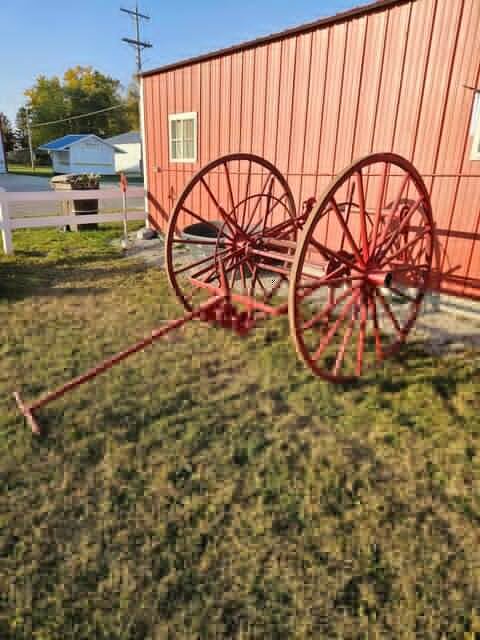
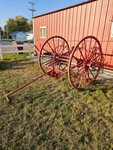
Shortly before the Dodge County Fair began this year, Greg and I drove to Kasson to pick up West Concord’s vintage fire hose cart that had been displayed for years next to the Log Cabin during Fair time. The Fair Board had been wanting it to return to West Concord because winter storage space on the fairgrounds was at a premium. The Museum plans to disassemble the hose cart and reassemble it in the Fire and Police display above the gymnasium. You’ll need to be sure to come see it!
Hand drawn hose carts required two people to pull them and were widely used in the late 1800s and early 1900s in small towns with volunteer fire departments. Often the hose cart was the first professional piece of firefighting equipment that was purchased by a community. The ability to get to a fire quickly depended on the speed with which the hose cart could be pulled.
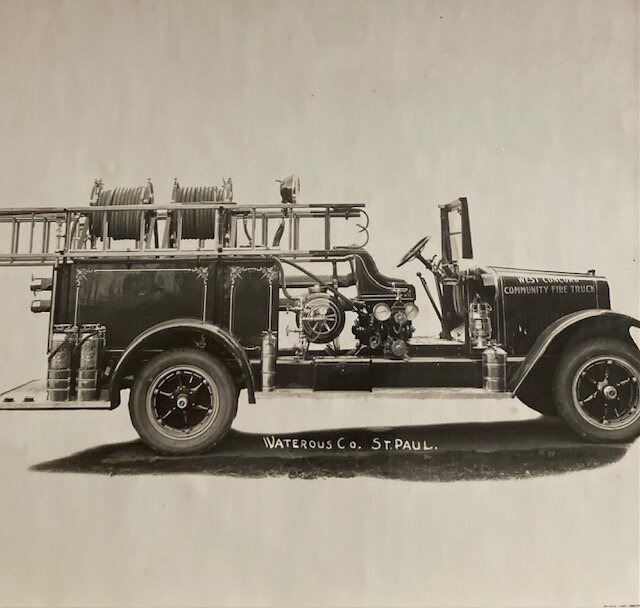
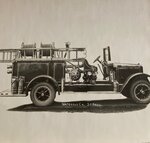
Until 1929, according to Bob Klapperich in his “Story Behind West Concord’s First Fire Truck”, the West Concord Fire Department had as their equipment a hand-pulled hook and ladder cart, two hose carts, a quarter mile of fire hoses, and at least five chemical fire extinguishers for battling fires. That all changed with the new International Harvester 1 1/4 ton truck that was converted to a Fire Fighting Apparatus by the Waterous Company in St. Paul. It could pump 300 gallons of water per minute and was purchased by the Fire Department for $1,150.00.
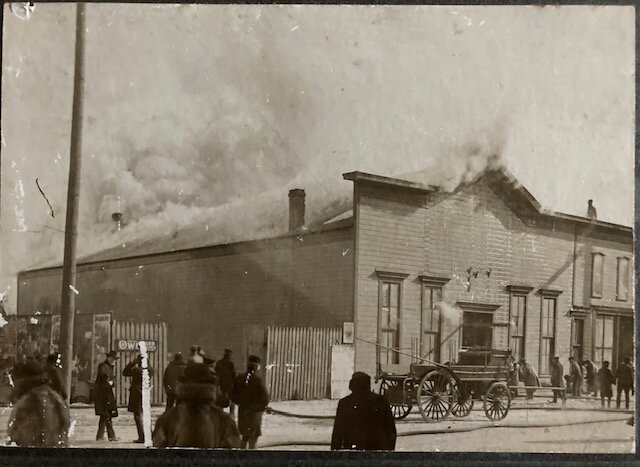
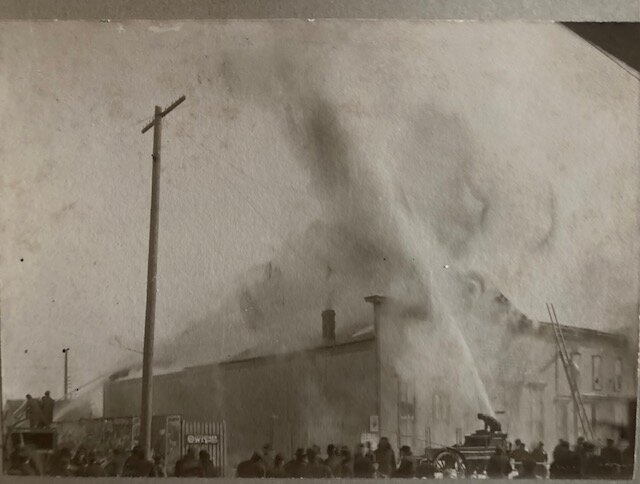
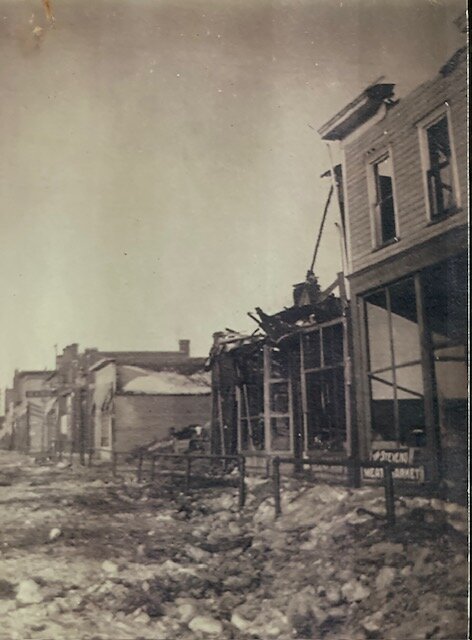
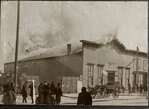
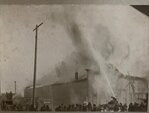
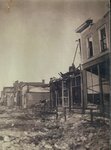
But in 1911, when what is known as the worst fire in West Concord’s history broke out, the old hose cart was likely to have been crucial fire fighting equipment. The fire started in the upper story of the Wyman Block on East Main Street. That’s where the Opera House was located. In the fire, the Opera House above, the Harness Shop and Wyman’s Dry Goods Store below, and the adjacent Home Bakery Restaurant and City Meat Market were all lost. Even though there was loss, a special midnight edition of the West Concord Enterprise praised the Fire Department with these words, “The wisdom of having a good fire department with up-to-date equipment was again proved.
The bulk of the business portion of West Concord has again been saved from going up in smoke by our efficient Fire Department.”
Our West Concord firefighters have kept amazing records of fires they have attended through the years. I can’t believe how mesmerized I’ve been by looking at the records of fires in the West Concord area from 1950 to 1964. The record keeper was very thorough and there is so much history contained in those records. Every entry
documents whose fire it was, the date and time, what was damaged, what was believed to be the cause, the value of the property, the estimated damage in dollars, and insurance coverage.
Grass fires were frequent entries because Chicago Great Western trains often sent sparks to the grass along the tracks. Here’s one fire reported on November 18, 1963 at 10:30 P.M. “Grass burning next to Standard Lumber Yard. Then a spot started to burn east of the west elevator soon after a train had passed.” One day on an incoming train with a carload of 50 foot wooden poles, an axle bearing overheated, and set the car on fire. Fire Department to the rescue.
Smoking cigarettes, cigars, and pipes set many a fire. So did overheated oil stoves, oil heaters, and flat irons. Kids playing with matches and lighting homemade gasoline torches caused abundant fires, but none so sad as the fire that took the life of a six week old baby girl in her crib who was sleeping in the very room where matches had been lit for play—so heartbreaking.
Many breeder house fires through the years took the lives of baby chicks. Faulty heat lamps and oil heaters were the usual causes of their deaths. Rubbish fires were common and sometimes caused problems in the back of stores on Main Street. One restaurant owner’s shed caught fire when another businessman’s rubbish-burning sent
sparks his way. Northern States Power was not happy when rubbish was burned so close to their new poles in the Main Street alley that the poles caught on fire. Country schools had some fire damage too from rubbish burning that got out of hand. Even the sun was a culprit when it ignited cleaning fluid while someone was dry cleaning dresses.
One of the most interesting accounts I read is this one: May 5, 1957, 1:10 a.m.
Cause of fire in the Recreation Parlor on Main Street: “This place was swept the last thing in the evening. In these sweepings there probably was a lighted cigarette. These sweepings were placed in a cardboard box and left back of the counter on top of the trash can. This cardboard box, after starting to burn, probably fell off and under the
counter. The clock stopped at 11:27 p.m. Damage to the building $1000.” The description explains so well how one thing leads to another in a fire.
At O’Brien’s Store in Old Concord a truck had filled with gas, but accidentally pulled away with the gas pump hose still hooked on the truck. This pulled the pump over and the Fire Department was called. I detected a note of disbelief when the following was reported. People were lighting fireworks in their 1960 Rambler wagon when the cushions caught on fire. Yikes!
If you can imagine it, it’s happened in the line of firefighting. A popular slogan of firefighters is “Each day is just another step in saving lives and property.” Thank you to our hometown heroes for doing just that.